Is Iams Proactive Health a Good Fit for a Miniature Schnauzer's Diet?
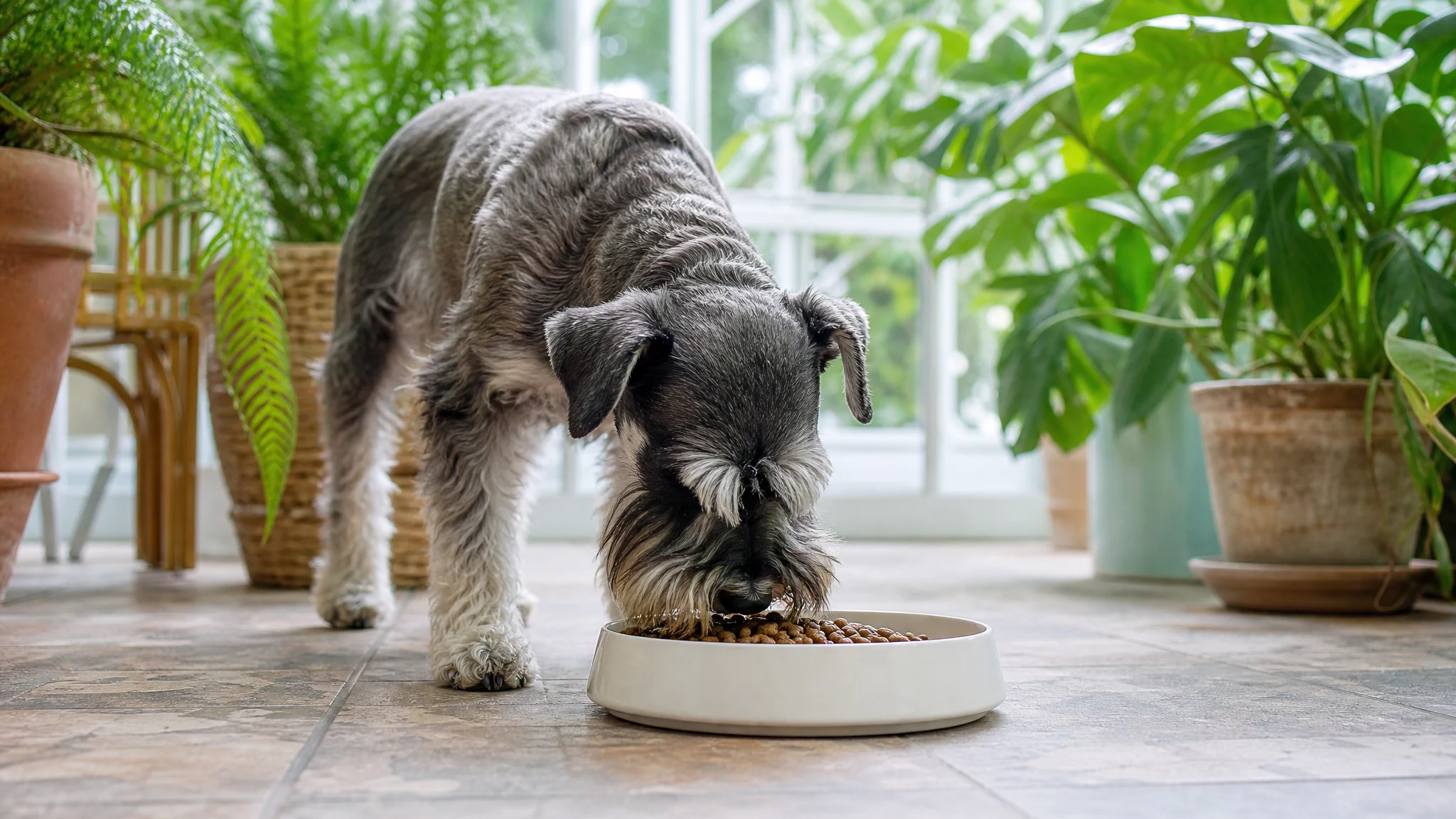
General nutrition information compiled from product labels and published sources, not veterinary advice. Your veterinarian is the right person to choose a diet for your dog, especially one with a health condition.
Many Miniature Schnauzer owners ask about iams proactive health dog food because it is easy to find and the name sounds reassuring. A name is not a nutrient profile, though. The only way to judge any bag is to read its label against what your dog needs.
This guide walks you through that check in order. It does not hand you a verdict, because the right food depends on your dog's age, weight, health and your veterinarian's advice.
One note on method. We compared label data only. We did not run feeding trials or taste tests, and we have no first-hand results to report. The Iams label details are also not in the research behind this page, so you will pull them from your own bag or from the Iams website. We will not guess at them.
What You Need Before You Start
- The bag or the official product page for the exact Iams Proactive Health formula you are considering. Iams sells several, so the formula name matters.
- Your dog's current weight and age. The Hill's Pet Nutrition breed page lists adult Miniature Schnauzers at 11 to 18 lbs for males and 10 to 15 lbs for females.
- Any health notes from your veterinarian, such as pancreatitis, high triglycerides or urinary stones.
- A pen and paper, or a notes app, to record the numbers you find.
- A kitchen scale or a standard measuring cup for portioning later.
Why the Breed Changes the Question
A Miniature Schnauzer is a small dog, with a life expectancy of 12 to 14 years according to the Hill's Pet Nutrition breed page. Small dogs do well on foods made for their size, but size is only one piece.
Science for Animal Welfare (formerly UFAW) notes that the breed is predisposed to pancreatitis and to idiopathic hyperlipidaemia, which means high triglycerides. It says this is seen most often in middle-aged and older dogs and tends to worsen with age. A research article in PubMed Central also describes a high risk of calcium oxalate urinary stones in the breed.
These are predispositions, not diagnoses. Your dog may never have any of them. They are still the reason a label check matters more for this breed than for a dog with no such tendencies.
Step-by-Step: Checking the Label
Step 1: Confirm the exact formula and life stage
Write down the full product name, including words like puppy, adult, small breed or senior. A food built for one life stage may not suit another.
For adults, look for a maintenance statement. For a puppy, look for growth or all life stages. A Miniature Schnauzer's adult weight is well under the 70 lb line AAFCO uses, so large-breed puppy rules do not apply. A food labeled "except for growth of large size dogs" is an acceptable wording for this breed. It is not a warning sign here.
Step 2: Find the AAFCO nutritional adequacy statement
This sentence, usually near the nutrient panel, says whether the food is formulated to meet AAFCO nutrient profiles or was proven in feeding tests. Copy it word for word.
Brands word it differently. Hill's Science Diet small and mini adult formulas say that animal feeding tests using AAFCO procedures substantiate complete and balanced nutrition. Royal Canin's Miniature Schnauzer Adult says it is formulated to meet the AAFCO profiles for maintenance. Both are valid statements, and they are different methods. Note which one your Iams formula uses.
Step 3: Record protein and fat
Find the crude protein and crude fat numbers. Most bags list them as minimums, meaning the food contains at least that much, and the true figure can be higher.
Fat deserves a close look for this breed. A minimum fat number is a floor, not a ceiling. If your dog has a history of pancreatitis or high triglycerides, a minimum alone does not tell you how rich the food really is. Ask the brand for typical values, or ask your veterinarian to read the label with you.
Step 4: Note calories per cup
Calories per cup tell you how much the food packs into each scoop. For a dog of 10 to 18 lbs, small differences add up quickly.
Look for the kcal per cup figure on the bag or the brand page. Write it down. If you cannot find it, contact the brand. Do not estimate it from another food.
Step 5: Read the first five ingredients
Ingredients are listed by weight before cooking. The first five show the bulk of the recipe. Note whether the first item is a named meat, a meal, or a grain.
Stay skeptical of front-of-bag claims. Words like "proactive" or "natural" are marketing language. They are not nutrient measurements. Judge the food by the statement, the numbers and the ingredients.
Step 6: Compare against a few reference foods
Numbers mean more beside other numbers. The table below uses label data from three brand pages. Compare your Iams notes to these and see where they land.
| Food | Life stage | Protein | Fat | Calories | First ingredients |
|---|---|---|---|---|---|
| Royal Canin Miniature Schnauzer Adult (dry) | Adult, maintenance | 23% min | 10% min | 309 kcal per cup | Brewers rice, brown rice, oat groats, corn gluten meal, wheat gluten |
| Hill's Science Diet Adult Small & Mini Chicken & Brown Rice (dry) | Adult, maintenance | 25% average, dry matter | 15.3% average, dry matter | 357 kcal per cup | Chicken, brown rice, whole grain wheat, whole grain corn, brewers rice |
| VICTOR Hi-Pro Plus Small Breed Adult (dry) | All life stages except growth of large size dogs | 30% min | 14% min | 360 kcal per cup | Beef, chicken meal, beef meal, brown rice, whole grain millet |
Do not read this table as a ranking. Hill's lists averages on a dry matter basis, not guaranteed minimums, so its numbers are not directly comparable to the others. The table shows how different the label data can look from one small-breed food to the next.
You can read each brand's own page: Royal Canin Miniature Schnauzer Adult, Hill's Science Diet Adult Small & Mini and VICTOR Hi-Pro Plus Small Breed Adult. For a wider look, see our Miniature Schnauzer foods compared page.
Step 7: Take your notes to your veterinarian
Bring the formula name, AAFCO statement, protein, fat, calories and ingredients. Ask directly whether the food suits your dog's weight, age and any history of pancreatitis, high triglycerides or urinary stones.
A veterinarian decides what is appropriate for an individual dog. Prescription diets are only something a veterinarian prescribes. A store-bought food cannot stand in for one, and no label can treat a condition.
Step 8: Use the feeding guide as a starting point
The bag's feeding chart is a starting estimate. Begin near the amount listed for your dog's weight. Then adjust over the following weeks based on body condition and your veterinarian's input.
Change foods slowly. Mix a little of the new food into the old and increase it over several days. A sudden switch can upset a small dog's stomach.
Tips for a Better Comparison
- Compare foods in the same form. Dry, wet and fresh foods hold different amounts of water, so their percentages are not directly comparable.
- Check whether numbers are "as fed" or "dry matter." Mixing the two leads to wrong conclusions.
- Keep treats in mind. Small dogs reach their calorie needs fast, and extras can add up.
- Re-check the label now and then. Brands can change recipes, so a bag bought months apart may differ.
- If the FDA's canine heart disease (DCM) investigation worries you, read the FDA page itself. Its latest update was December 23, 2022, and it says adverse event reports alone do not show causation. Your veterinarian can help you weigh it for your dog.
Common Mistakes to Avoid
- Trusting the brand name. Two products from one brand can differ a lot in fat, calories and ingredients.
- Treating a minimum as the real number. A "10% minimum fat" food could contain more.
- Judging by the first ingredient only. Look at the whole top five and the nutrient panel.
- Ignoring life stage. A puppy food fed to a senior, or the reverse, may not match the dog's needs.
- Switching foods in one day. Go gradually.
- Using online claims as proof. Reviews and marketing copy are not label data.
What to Expect
A careful label check should give you a clear, written picture of what is in the food. That helps you and your veterinarian talk about it with real numbers.
It may also help you spot a mismatch early, such as a fat level that seems high for a dog with a history of pancreatitis. It cannot predict how your dog will do on the food, and no food prevents or treats any disease.
After a switch, many owners watch for steady stools, a healthy appetite and stable weight. Those are things to report to your veterinarian, who can tell you whether the food is working for your dog.
Bottom Line
Whether iams proactive health dog food fits your Miniature Schnauzer comes down to the exact formula and your dog's health. Read the AAFCO statement, protein, fat, calories and first ingredients. Compare them with other small-breed foods, then confirm the choice with your veterinarian. If you cannot find a figure, ask Iams directly.
Sources
- Hill's Pet Nutrition: Miniature Schnauzer breed page
- Science for Animal Welfare: Miniature Schnauzer pancreatitis and hyperlipidaemia
- PubMed Central: Urogenital microbiome in Miniature Schnauzers with and without calcium oxalate urolithiasis
- FDA CVM: Investigation into Potential Link between Certain Diets and Canine Dilated Cardiomyopathy
- Royal Canin: Miniature Schnauzer Adult
- Hill's Science Diet: Adult Small & Mini Chicken & Brown Rice
- VICTOR: Hi-Pro Plus Small Breed Adult