Signs a Miniature Schnauzer's Gut Health Needs a Diet Change
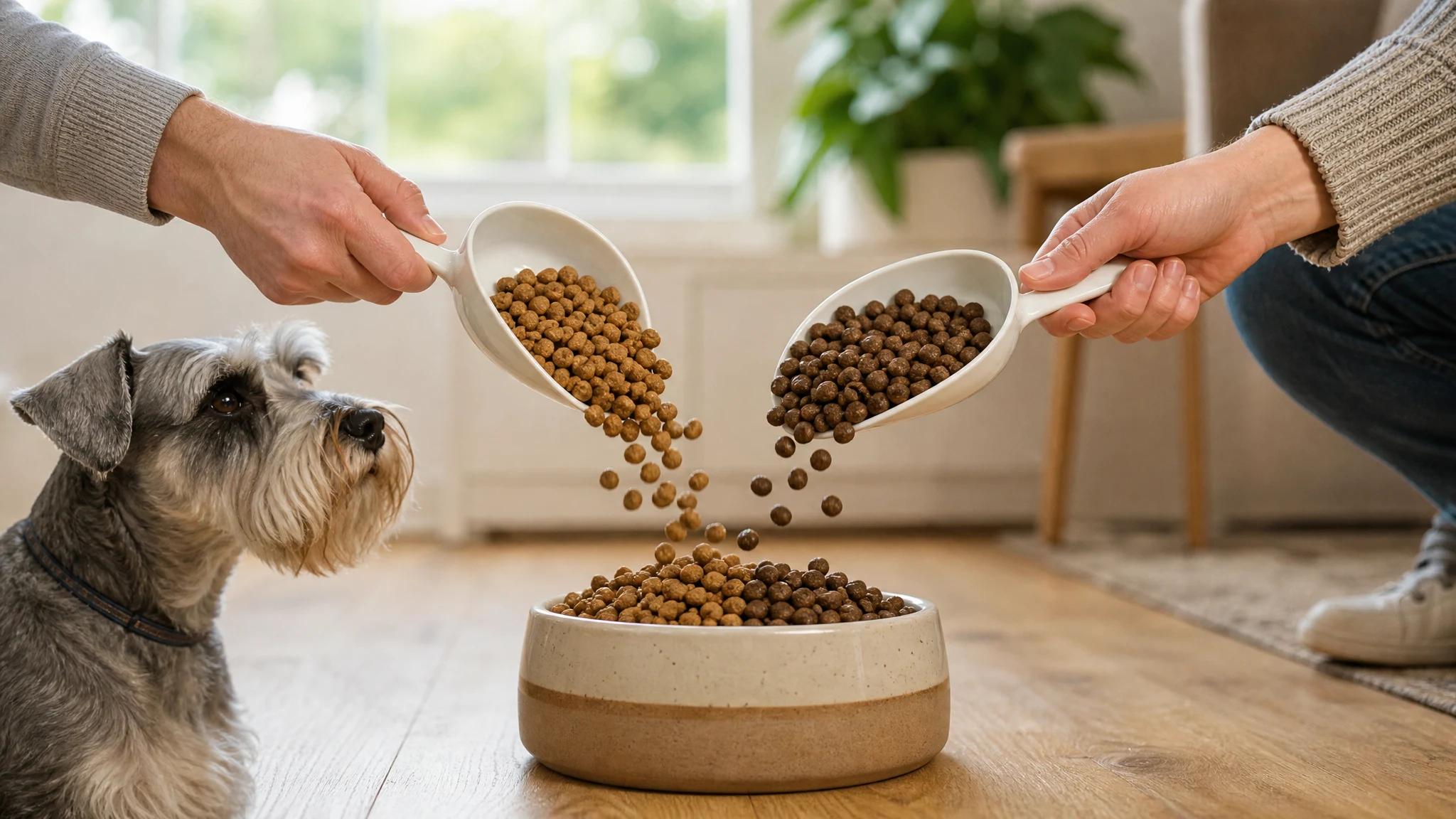
General nutrition information compiled from product labels and published sources, not veterinary advice. Your veterinarian is the right person to choose a diet for your dog, especially one with a health condition.
Most Miniature Schnauzers eat happily and digest without drama. When that changes, the food is one of the first things owners look at. It is also easy to blame the food when something else is going on.
This guide shows how to spot signs that a diet change may be worth discussing, how to compare dog food for gut health using the label, and how to switch foods slowly. We compared label data from the brands' own pages. We did not run feeding trials or taste tests, and nothing here replaces your veterinarian's advice.
Why this breed deserves a closer look
Science for Animal Welfare (formerly UFAW) notes that Miniature Schnauzers are predisposed to pancreatitis and to idiopathic hyperlipidaemia, which means high triglycerides. It says hyperlipidaemia is seen most often in middle-aged and older dogs and tends to worsen with age.
A predisposition is not a diagnosis. It means your dog's digestive signs deserve to be taken seriously and talked through with a veterinarian, rather than handled only by switching bags of food. For the wider picture, see our guide to Miniature Schnauzer nutrition and the diet factors that matter.
Materials you will need
- A notebook or phone notes app for a two-week food and stool log
- The current food's bag or label, including the ingredient list and the nutritional adequacy statement
- A kitchen scale or a proper measuring cup, so portions stay consistent
- Your dog's current weight, ideally from a recent vet visit
- The new food you are considering, with its label or brand page open for comparison
- Your veterinarian's phone number, for the questions in the steps below
Signs your Miniature Schnauzer's diet may need a second look
None of these signs proves the food is the cause. They are reasons to start a log and call your clinic.
- Repeated loose or watery stools that last more than a day or two
- Frequent gas, gurgling or belly noise that is new for your dog
- Vomiting or regurgitating meals, especially more than once
- Stools that change in color or look greasy
- Going off food, or acting hesitant at mealtime
- Straining, or urgent trips outside
- Weight creeping up or dropping without a change in portions
Some signs should not wait for a diet experiment. Repeated vomiting, a hunched or painful belly, lethargy, blood in the stool or vomit, or refusing food entirely call for a prompt veterinary visit. Do not switch foods first and hope it settles.
Step-by-step: how to approach a diet change
Step 1: Keep a two-week log before changing anything
Write down what your dog eats, including treats, chews and table scraps, along with stool quality, vomiting, appetite and energy. Many Miniature Schnauzers get extra bites that never make it into anyone's memory. The log often shows a pattern, such as trouble after a specific treat, that has nothing to do with the main food.
Step 2: Book a veterinary visit and bring the log
Ask your veterinarian whether the signs fit a food issue or need testing. Because the breed is predisposed to pancreatitis and high triglycerides, ask whether a lower-fat diet makes sense for your dog and whether any bloodwork is worthwhile. Ask about urinary health too. A published study in PubMed Central describes the breed as having a high risk for calcium oxalate stones, so diet choices can involve more than digestion.
Only a veterinarian can prescribe a therapeutic or prescription diet. If one is recommended, follow that plan rather than a retail shortcut.
Step 3: Read the label of the current food
Find the nutritional adequacy statement. It tells you whether the food is formulated for adult maintenance, growth, or all life stages. Then look at the first several ingredients, the guaranteed analysis and the calories per cup.
Also check your portions against the label's feeding guide. Treat the guide as a starting point, not a rule. Overfeeding can cause soft stools by itself, and it is a common reason people think a food is failing.
Step 4: Compare candidate foods on label data
Here is how a few small-breed options compare on what their own pages publish. This is not a ranking, and none of it shows a food will suit your dog's gut.
| Food (dry, adult) | Fat | Calories | Notes from the brand page |
|---|---|---|---|
| Royal Canin Miniature Schnauzer Adult | 10% minimum | 309 kcal ME per cup, calculated | Breed formula for purebred dogs 10 months and older. Lists brewers rice, brown rice and oat groats first. |
| Hill's Science Diet Adult Small & Mini Chicken & Brown Rice | 15.3% average, dry matter basis | 357 kcal per cup | Chicken is the first ingredient. The page does not give a guaranteed minimum for fat. |
| VICTOR Hi-Pro Plus Small Breed Adult | 14% minimum | 360 kcal per cup | Beef is the first ingredient. Labeled for all life stages except growth of large size dogs. |
Notice the catch in the fat column. A guaranteed minimum on an as-fed basis and an average on a dry matter basis are different measures, so you cannot compare them directly. If you are weighing fat levels, ask your veterinarian or the brand to help convert them. Kibble size is not listed as a measurement on these pages, so check with the brand if it matters for your dog.
Fresh and wet foods exist too, and their pages list different moisture and calorie figures. Calories per cup differ widely between formats, so match amounts to each product's own feeding guide.
Step 5: Choose a food with a clear nutritional adequacy statement
When you shop for dog food for gut health, remember that the label does not promise a digestive result. What it can tell you is whether the food is complete and balanced for your dog's life stage. A Miniature Schnauzer's adult weight is well under the 70 lb line AAFCO uses for large-size dogs. A growth or all-life-stages food, including the "except for growth of large size dogs" variant, can therefore suit a puppy of this breed.
Be skeptical of marketing words such as "sensitive," "digestive" or "gut-friendly." Those phrases are not a substitute for the adequacy statement, the ingredient list and your veterinarian's view. On the grain-free question, the FDA's page on its investigation into diets and canine dilated cardiomyopathy says adverse event reports alone do not establish causation. Its latest update was December 23, 2022. Ask your veterinarian how it applies to your dog.
Step 6: Transition slowly over about a week or more
A gradual switch is the usual approach, because abrupt changes can upset a dog's stomach. One common pattern, not a rule, looks like this:
- Days 1 to 3: about one quarter new food, three quarters old food
- Days 4 to 6: about half and half
- Days 7 to 9: about three quarters new food, one quarter old
- Day 10: all new food, if stools and appetite look steady
If stools soften, hold at the current step for a few more days, or call your veterinarian. Keep total daily calories steady throughout, and use the new food's feeding guide as the starting point, since calories per cup differ between foods.
Step 7: Keep logging and reassess
Continue the notes for at least two to four weeks after the switch. Review them with your veterinarian at the next visit, and adjust portions if your dog's weight moves. Hill's, for example, tells owners to adjust amounts to maintain optimal weight and to ask a veterinarian if unsure.
Tips that help
- Change one thing at a time. Do not swap food, treats and chews in the same week.
- Keep treats modest and plain. Rich, fatty extras are worth running past your veterinarian, given this breed's predispositions.
- Weigh the food. A level scoop can vary a lot from one person to the next.
- Take photos of stools if your veterinarian is willing to look at them. They are often easier than describing.
- Use the brand's own page for the latest ingredients and statements, since formulas can change.
Common mistakes to avoid
- Switching foods repeatedly. Rotating through bags every few weeks makes it hard to learn anything.
- Changing too fast. A same-day swap is a common cause of the upset you are trying to fix.
- Self-treating a sick dog. A food change is not a replacement for a diagnosis.
- Adding supplements on your own. Ask your veterinarian first, and follow their guidance on any product.
- Judging by the front of the bag. Read the adequacy statement and ingredients instead.
- Feeding a puppy food to an adult without checking calories and your vet's view.
What results to expect
Results vary. If food was a factor, some owners see firmer stools or steadier appetite within a few weeks of a careful transition. A change may also make no visible difference, which suggests the cause lies elsewhere. No food can be promised to prevent, treat or cure a digestive condition, pancreatitis, high triglycerides or urinary stones.
If signs persist, return, or get worse, go back to your veterinarian. Your notes will make that conversation faster and more useful.
Sources
- Science for Animal Welfare: Miniature Schnauzer pancreatitis and hyperlipidaemia
- PubMed Central: Urogenital microbiome in Miniature Schnauzers with and without calcium oxalate urolithiasis
- FDA CVM: Investigation into potential link between certain diets and canine dilated cardiomyopathy
- Hill's Pet Nutrition: Miniature Schnauzer breed page
- Royal Canin: Miniature Schnauzer Adult
- Hill's Science Diet: Adult Small & Mini Chicken & Brown Rice
- VICTOR: Hi-Pro Plus Small Breed Adult